The app that isn't quite an app: how Chicken Road 2 actually lands on your phone
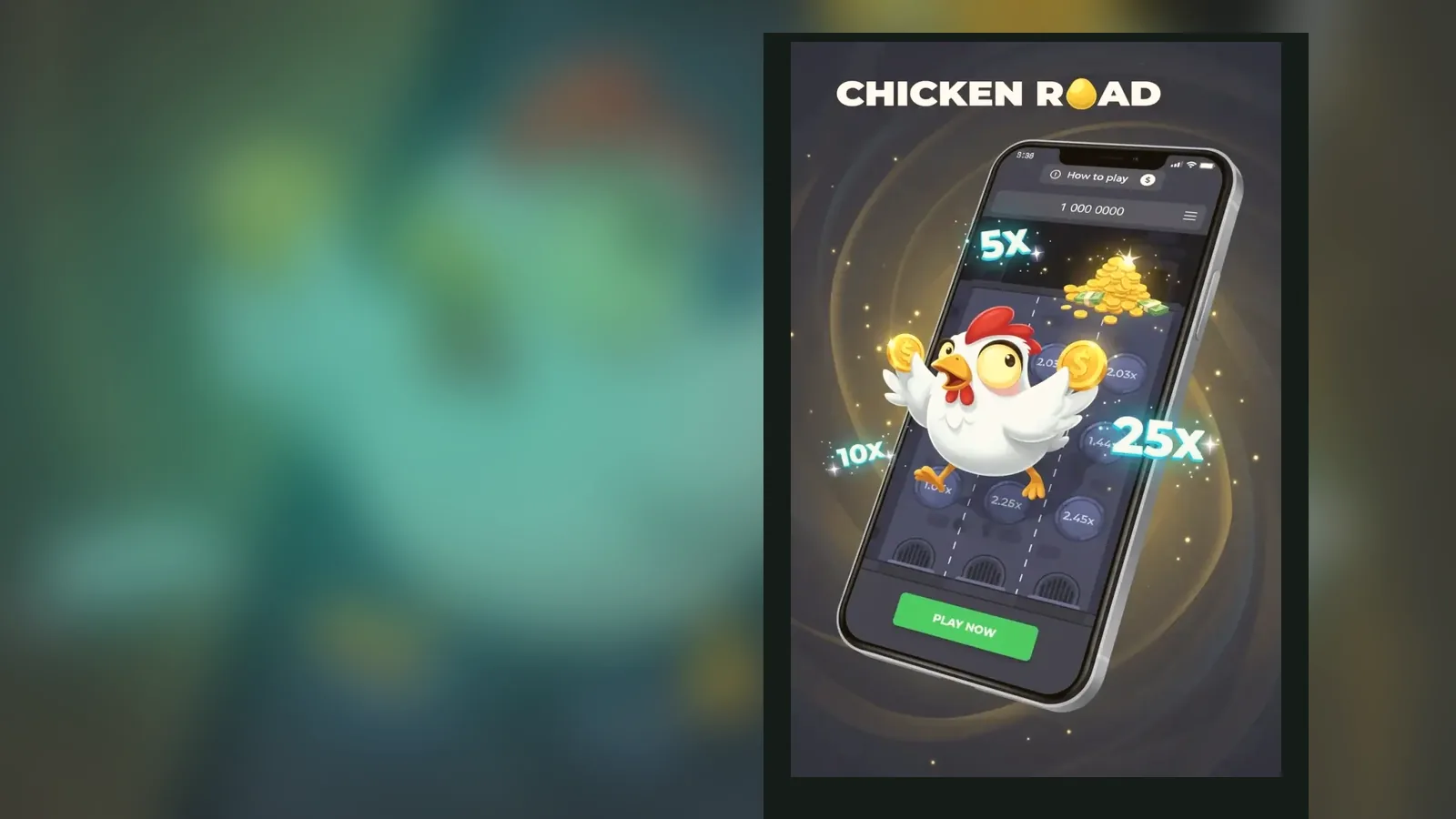
Here's the twist that changes everything for UK players: Google Play and the App Store both allow real-money gambling apps from UKGC-licensed operators, but most crash games—including Chicken Road 2—don't bother with a standalone download. The game runs in your browser or as a progressive web app, which means no app-store approval wait, no 200 MB install, and no version fragmentation when the provider pushes an update.
That freedom comes with a trade-off. You won't find Chicken Road 2 in a curated store listing with verified reviews and automatic updates. Instead, you'll play through an operator's site or their own app, and if you see a dedicated «Chicken Road 2 APK» download link on a forum or ad network, you're almost certainly looking at a clone designed to harvest your card details. This page walks you through every legitimate install path, what you'll see on each screen, the device requirements that matter, and the permission requests that should make you close the tab and walk away.
The store card that doesn't exist—and what it would say if it did
Chicken Road 2 isn't distributed as a standalone title, so there's no official Play Store or App Store listing under the game's name. But if you're comparing it to other crash games or trying to gauge legitimacy, here's the spec sheet you'd see if it were packaged as a dedicated app. These numbers reflect the browser version's behaviour and the typical operator-app wrapper:
The version number is mostly cosmetic—updates happen on the provider's server, so you're always playing the latest build without reinstalling. The operator app's size includes the lobby, payment integrations, and other casino games; the Chicken Road 2 component itself is under 8 MB. Downloads and ratings vary wildly because each licensed site publishes its own app, and player reviews often conflate game bugs with withdrawal disputes or KYC delays.
What you actually see on screen: five snapshots of the interface
Before you install anything, you need to know what a legitimate Chicken Road 2 screen looks like. Fakes often clone the grid and the chicken sprite but botch the UI proportions or add non-standard buttons. Here's what's real:
- Landing screen: A 5×5 grid fills most of the viewport, each tile initially face-down. Your stake input sits at the bottom centre—default £1.00, adjustable with + and − buttons. The top bar shows your balance (live-updated from the casino wallet) and a hamburger menu for game rules, sound toggle, and history. No pop-ups, no «Spin to Win» wheel, no countdown timer trying to rush you. If the first screen you see is a bonus offer with a countdown, you're on a marketing page, not the game.
- Pre-reveal: You've set your stake and tapped «Play». The grid animates—tiles flip in a wave or a random pattern, depending on the skin—and multipliers appear: 2× through 10×, with a few red skull tiles (instant loss). A bright green «Cash Out» button replaces the stake input. The chicken sprite appears at the bottom of the grid, waiting for your first tap. No server delay here; the outcome was determined the moment you tapped Play, but the reveal is interactive.
- Mid-game: You've uncovered three safe tiles—say 2×, 3×, and 2× again. Your running multiplier (2 × 3 × 2 = 12×) displays above the grid in large font, next to your potential win (£1.00 × 12 = £12.00). The remaining tiles are still face-down. One more safe pick and you might hit 36×, or you might land on a skull and lose the stake. The «Cash Out» button pulses gently. Every legitimate version lets you cash out at any point before a skull; if the button greys out or the game forces you to pick again, you're playing a rigged clone.
- Win screen: You cashed out at 12×. The grid fades, and your win—£12.00—animates into your balance with a brief fanfare. A «Play Again» button appears, pre-filled with your last stake. No upsell, no «Double or Nothing» mini-game, no redirect to another slot. The cleanest versions show a small trophy icon and your win in the recent-hands sidebar; the cluttered ones add confetti and sound effects you can't mute. Both are legitimate; it's a skin choice.
- Loss screen: You picked a skull on the second tile. The grid reveals all positions at once—you see where the safe path was and how far you could have gone. Your stake is gone, the balance updates, and «Play Again» returns. Some skins show a cracked egg or a sad chicken sprite; others just reset the grid. If the loss screen tries to sell you a «second chance» or an insurance bet, you're on a modded client, not the real game.
Every screen transition is instant on a stable 4G or Wi-Fi connection. If you see buffering wheels between rounds, the issue is your connection or the operator's server load, not the game itself. A laggy experience doesn't mean fake, but it does mean you should test the site's other crash games—if they're all slow, the platform infrastructure is struggling.
Four install routes, step by step, and the risk profile of each
You have four ways to get Chicken Road 2 on your phone. Three are safe, one is a minefield. Here's the breakdown with numbered steps and the gotchas:
Route 1: Browser play (lowest friction, zero install)
- Open Safari (iOS) or Chrome (Android) and navigate to a UKGC-licensed casino that hosts the game. Check the footer for the licence number and cross-reference it in the UKGC public register—this is not optional.
- Register and verify your age. You'll need photo ID and proof of address before you can deposit; the KYC wait is 24–48 hours on most platforms. Demo mode may be available after login, but many UK sites now gate free play behind age verification.
- Tap «Casino», filter by provider or search «Chicken Road». The game opens in a new browser tab or an embedded iframe. Add a home-screen bookmark if you'll play regularly (long-press the URL bar on iOS, «Add to Home Screen»; Chrome's menu → «Add to Home screen» on Android).
- Play. Your session persists as long as the tab stays open and you don't clear cookies. Balance updates are live; you can switch to another app and return without reloading.
Risk: Near zero if you verified the licence. The only attack vector is a phishing site cloning the operator's domain (e.g., «betsite.co.uk» vs «betsite-uk.com»). Always type the URL manually or use a bookmark you created after checking the UKGC register.
Route 2: Add to Home Screen (progressive web app behaviour)
- Follow Route 1 steps 1–3 to open the game in your browser.
- On iOS: Tap the Share icon (square with an arrow), scroll down, select «Add to Home Screen». Name it «Chicken Road 2» or leave the auto-filled title. Tap «Add». An icon appears on your home screen; tapping it opens the game in a standalone window without browser UI.
- On Android: Tap Chrome's menu (three dots), select «Add to Home screen». Confirm the name and tap «Add». The icon appears in your app drawer and home screen. Opening it launches a borderless window that feels like a native app.
- The PWA caches assets locally (~8 MB), so the second load is faster. You still need a connection to play—RNG happens server-side—but the interface is instant.
Risk: Identical to Route 1. You're bookmarking the legitimate site, not downloading executable code. The worst that can happen is you add the wrong URL to your home screen, which is why you verify the licence before saving the bookmark.
Route 3: Operator's official app (Play Store or App Store)
- Search the operator's name—not «Chicken Road 2»—in Google Play or the App Store. Check the developer name matches the licensed entity (it's in the UKGC register entry).
- Install the app (45–120 MB depending on how many games the lobby includes). Open it, register or log in, complete KYC as in Route 1.
- Navigate the lobby to find Chicken Road 2. Some apps have a search bar; others bury it in «Crash Games» or «Instant Win». Tap to launch. The game runs in an embedded web view—it's still the browser version, just framed inside the app's UI.
- The app may offer biometric login, push notifications for bonuses, and a slightly faster lobby load. The game itself is identical to Route 1.
Risk: Low if you download from the official store and verify the developer. The app has been vetted by Apple or Google for malware, and updates are automatic. The risk shifts to the operator's security practices—if their server is breached, your account is exposed whether you used the app or the browser. Enable two-factor authentication if the platform supports it.
Route 4: APK sideload (Android only, almost never legitimate)
- You find a «Chicken Road 2 APK» link on a forum, Telegram group, or ad landing page. The pitch is usually «Play without KYC» or «Cracked version, unlimited balance».
- You enable «Install from Unknown Sources» in Android settings and download the APK. It installs without Google Play's malware scan.
- You open the app. It may look identical to the real game, complete with cloned UI and animations. You're asked to log in or create an account—sometimes with a simplified registration that skips ID checks.
- You deposit. The app either steals your card details immediately or lets you play a few rigged rounds (the RNG is local, not server-verified, so it can hand you wins to build trust) before your withdrawal request vanishes into a fake support queue.
Risk: Extreme. You have no way to verify the APK's origin, the RNG isn't audited, and the operator is unlicensed—which means no UKGC register entry, no GAMSTOP integration, and no recourse if your funds disappear. Even if the app is «just» adware or a data harvester rather than a payment-card skimmer, you've handed over your email, phone number, and behavioural data to an unknown party. The legitimate way to play Chicken Road 2 on Android is Route 1, 2, or 3. If someone offers Route 4, they're either scamming you or redistributing a scam they fell for themselves.
What your phone needs to run the game without stuttering
Chicken Road 2 is lightweight compared to 3D slots, but it's not immune to performance issues on older hardware or shaky connections. Minimum and comfortable specs:
- Operating system: iOS 13 or later (iPhone 6S and up); Android 8.0 Oreo or later (devices from 2017 onwards). Older versions may load the game but struggle with animation smoothness, especially during the grid-reveal sequence.
- RAM: 2 GB minimum, 3 GB comfortable. If your phone has 1 GB and you're running multiple apps, expect the browser tab to reload mid-session, which boots you from an active round (your stake is safe—the server remembers your last action—but it's disruptive).
- Connection: 4G with stable signal or Wi-Fi. The game sends and receives small data packets every round—your pick, the reveal, balance updates—so a 3G connection works in theory, but any packet loss causes a timeout error. Latency over 200 ms makes the cash-out button feel sluggish, which is a problem in a game where timing your exit is the entire strategy.
- Browser: Safari 13+ on iOS, Chrome 80+ or Firefox 85+ on Android. The game uses WebGL for tile animations and WebSockets for live balance updates; ancient browser versions lack support and either fail to load or fall back to a static, non-animated version that's harder to read.
- Storage: The PWA caches ~8 MB; the operator app needs 100–200 MB for the full lobby. If your storage is under 500 MB free, iOS and Android both throttle background tasks, which can kill your session if you switch apps.
Screen size isn't critical—the grid scales down to fit a 4-inch display—but anything smaller than an iPhone SE or a budget Android with a 5-inch screen will make the multiplier text hard to read without zooming, and zooming disables the cash-out button on some skins (it interprets the gesture as a pan, not a tap). If you're playing on an old phone and the interface feels cramped, try landscape mode; the grid reflows to use the extra width.
What the app actually does—and what it doesn't
Whether you're on Route 1, 2, or 3, the Chicken Road 2 client is a presentation layer wrapped around the operator's wallet and the provider's RNG server. Here's what happens when you tap «Play»:
- Your stake (say, £2.00) is deducted from your casino balance and held in escrow. The operator's server logs the transaction; your balance updates instantly on screen.
- The game client sends a request to the provider's RNG server. The server generates a grid outcome—randomising multiplier values and skull positions according to the published RTP and volatility model—and hashes the result with a timestamp and your session ID. That hash is what proves fairness later.
- The server sends the outcome back to your client as an encrypted payload. The client decrypts it and stores it locally (in memory, not on disk). From this moment, the round's result is fixed. You're not influencing the RNG by picking tiles; you're revealing a predetermined path.
- You pick tiles. Each tap decrypts the next piece of the payload and displays the multiplier or skull. The maths happens in real time on your device: if you uncover 3× then 2×, your client multiplies your stake (£2.00 × 3 × 2 = £12.00) and updates the UI. No server call per pick—it's all local until you cash out or hit a skull.
- You cash out or lose. If you cash out, the client sends your final multiplier to the server, which credits your balance (£12.00 in this example, minus any wager contribution toward a bonus if you're mid-rollover). If you hit a skull, the server logs the loss and your stake is forfeited. Either way, the round hash is saved to your game history, where you can verify it against the provider's public seed if you suspect a rigged outcome.
What the app doesn't do: it doesn't run the RNG locally (if it did, you could reverse-engineer the seed and predict outcomes), it doesn't store your card details (payments go through the operator's gateway, which is PCI-DSS certified if they're UKGC-licensed), and it doesn't modify your balance without the operator's server confirming the transaction. The client is a display and input device. All the trust-sensitive operations—random number generation, balance accounting, wager tracking—happen server-side, which is why the operator's licence status is the only thing that matters. A beautiful app on a scam site is still a scam.
Version 2.1 and what changed (spoiler: mostly invisible)
The provider doesn't publish detailed changelogs for Chicken Road 2 because updates roll out server-side, not as client downloads. But here's what players and operators have noted since the game moved from version 1.9 to the current 2.1.x branch over the past eight months:
- Faster tile reveals: The grid-flip animation was cut from ~1.2 seconds to ~0.7 seconds. It's not a gameplay change—the outcome was always instant—but the perceived wait is shorter, which matters in a high-frequency game where you're playing multiple rounds per minute.
- Improved mobile responsiveness: The grid now reflows more gracefully on narrow screens and rotates smoothly between portrait and landscape. Version 1.9 would occasionally clip the cash-out button at certain aspect ratios (notably on foldable phones); that's fixed.
- Better WebSocket reconnection: If your connection drops mid-round, version 2.1 attempts to reconnect and restore your session state (your last pick, your running multiplier) rather than aborting the round and refunding your stake. It doesn't always work—if the disconnection lasts more than 30 seconds, the server still times you out—but short drops (switching from Wi-Fi to 4G, walking through a dead zone) are now survivable.
- Visual tweaks to the skull tile: Some players reported the red skull was hard to distinguish from the 10× multiplier on high-brightness screens in direct sunlight. The skull icon is now slightly larger and uses a darker red with a black border. It's a minor accessibility improvement but a real one if you play outdoors.
- Balance display precision: Your balance and potential win now show two decimal places (£12.34) instead of rounding to the nearest pound. This was a frequent complaint on UK forums—players wanted to track small wins accurately, especially when working through wager requirements where every 20p counts.
Nothing here changes the RTP, the volatility, or the maximum multiplier. The maths is identical to version 1.9. If you played a year ago and come back now, the game will feel slightly snappier and look a bit cleaner, but the strategy and risk profile are unchanged. The only update that would matter to your decision-making is if the provider adjusted the skull frequency or the multiplier distribution, and those changes would trigger a new RTP certification, which would be announced on licensed operators' sites. No such announcement has appeared.
How to spot a fake and which permissions scream 'delete this now'
Clones and scam APKs are common because Chicken Road 2's UI is simple to replicate and the game's name has search volume. Most fakes fail basic scrutiny, but a few are convincing enough to fool casual players. Red flags and deal-breakers:
- The site or app doesn't show a UKGC licence number in the footer, or the number is fake (not in the UKGC public register when you search it). This is the primary filter. No licence, no trust. If the site claims to be licensed in Curaçao or Malta but serves UK players, it's operating illegally here—the UKGC requires every operator targeting British customers to hold a remote licence.
- The app is called «Chicken Road 2 Official» or «Chicken Road 2 Pro» and is published by a developer you've never heard of. The real game doesn't have a standalone app under its own name; it's embedded in licensed operators' apps. Any «official» APK is unofficial by definition.
- The app requests permissions that have nothing to do with playing a casino game: access to your contacts, SMS read/write, call logs, camera and microphone (outside of KYC verification flows, which happen in a web view, not via native permissions), location when you're not in a geo-restricted market, or device admin rights. The legitimate browser version and operator apps need internet access, storage (for caching assets), and optionally notifications (for bonus alerts) and biometrics (for login). Anything beyond that is either adware or spyware.
- The game lets you play without KYC or asks for card details before age verification. UKGC rules require age and identity checks before you can deposit. If an app lets you skip this step, it's either unlicensed or running a delayed-scam model where they'll lock your account and demand documents after you've deposited but before you can withdraw—at which point your funds are hostage.
- The stake limits don't match UK regulations. If the app lets you bet £10.00 per round and you're logged in as an 18–24-year-old, or if there's no stake cap at all, it's not complying with the £2 and £5 limits introduced in April 2025. Licensed operators enforce these limits at the server level; a clone won't bother.
- The RTP and volatility aren't disclosed, or they're listed as 99% or «guaranteed wins». The real game's RTP is published by the provider and sits around 96–97%. A fake app doesn't connect to a certified RNG, so it can set any return rate it likes—usually much lower than advertised, with rigged outcomes that look plausible until you try to cash out a big win.
The safest habit: never install Chicken Road 2 (or any casino game) from a source other than a UKGC-licensed operator's official site or their verified app in Google Play or the App Store. If you can't find the game on a licensed platform, it means no UK operator has added it to their lobby yet, and you wait. The alternative is handing your money and data to criminals, which is a worse deal than not playing at all.
FAQ
Can I download Chicken Road 2 directly from Google Play or the App Store?
No standalone app exists under the game's name. You'll play it through a licensed operator's casino app (which you can download from the official stores) or in your mobile browser. Any «Chicken Road 2» app you find outside an operator's lobby is a clone, and almost certainly a scam designed to steal card details or push adware.
Do I need to download anything to play on my phone?
Not necessarily. The game runs in Safari or Chrome without installation—just open the operator's site, log in, and launch the game. If you want a home-screen icon for quick access, use the «Add to Home Screen» function in your browser; it caches assets locally (~8 MB) and opens the game in a standalone window, but you're still playing the browser version.
Why does the operator's app take up 100 MB when the game is only 8 MB?
The app includes the entire casino lobby, payment integrations, live chat, and dozens of other games. Chicken Road 2 itself is a small component. The browser or PWA route is lighter because you're only caching the game's assets, not the platform's full UI. If storage is tight, stick with the browser.
Is the APK version faster or does it have better odds?
Any APK claiming to offer Chicken Road 2 outside a licensed operator's distribution is fake. It won't connect to the provider's certified RNG, so the odds are whatever the scammer coded—usually far worse than the real game's RTP. It's also not faster; the browser version on a stable connection is instant. APKs are a security risk, not a performance upgrade.
Can I play offline after adding the game to my home screen?
No. The progressive web app caches the UI assets so the game loads quickly, but every round requires a server connection to generate the RNG outcome and update your balance. If you lose connection mid-round, version 2.1 attempts to reconnect and restore your session, but without internet, you can't play.
What permissions should I allow if I install the operator's app?
Internet access (required), storage (for caching and session data), notifications (optional, for bonus alerts), and biometrics (optional, for login). Deny requests for contacts, SMS, call logs, camera and microphone (unless you're in a KYC flow, which uses a web view), or device admin rights. If the app insists on these, delete it and report it to the app store.